
A clear path for custom development
OEM & ODM
for Custom
Product Projects
Bring an existing design or a concept to develop. Connect design, quality planning and supply-chain responsibilities before moving forward.
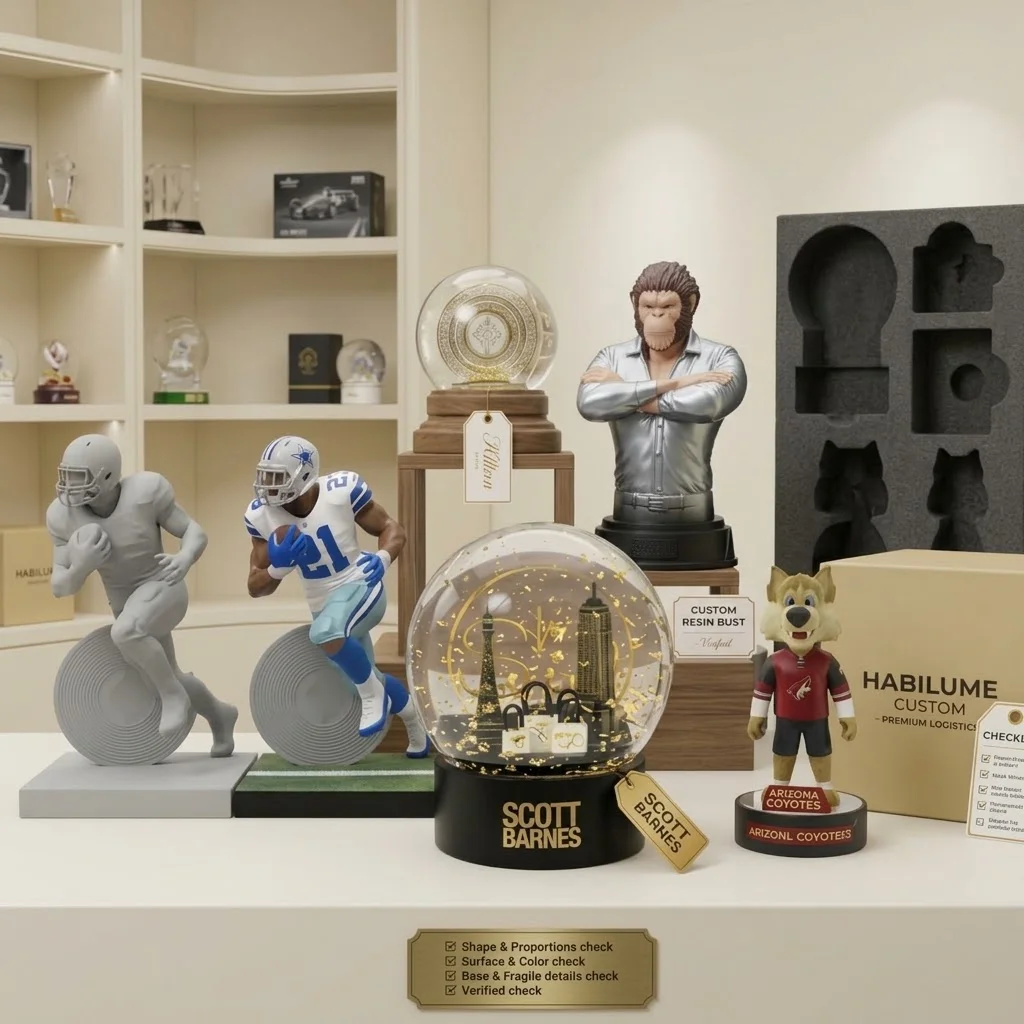
01 / Project inputs
Start With What You Have.
Make the Gaps Clear.
A useful brief explains the intended product and what still needs to be developed.
01 / VISUAL DIRECTION
Artwork & References
Sketches, images or available design files showing the intended form.
02 / PRODUCT SCOPE
Dimensions & Key Details
Dimensions, critical features, inspection expectations and required records.
03 / PROJECT CONTEXT
Quantity & Timing
A target quantity or range, intended use and desired milestones.
04 / DELIVERY CONTEXT
Packaging & Presentation
Box ideas, protection needs, supplier handovers and delivery requirements.
Existing design: identify what should stay fixed.
Concept stage: identify what still needs development.
02 / Project stages & quality handovers
Five Stages.
Clear Decisions Along the Way.
01, Brief & Feasibility
DISCUSSION
Product idea, available inputs and the questions that need review.
Product idea, available inputs and the questions that need review.
DECISION TO RECORD
The scope of the next development step.
The scope of the next development step.
02, Design & Specification
DISCUSSION
Dimensions, references, product details and sample scope.
Dimensions, references, product details and sample scope.
DECISION TO RECORD
The version to use for sample planning.
The version to use for sample planning.
03, Sample & Approval
DISCUSSION
Sample feedback, revision points and acceptance criteria.
Sample feedback, revision points and acceptance criteria.
DECISION TO RECORD
The approved reference and any remaining conditions.
The approved reference and any remaining conditions.
04, Production & Checkpoints
DISCUSSION
Incoming, in-process and final checks; supplier requirements and open quality items.
Incoming, in-process and final checks; supplier requirements and open quality items.
DECISION TO RECORD
Check criteria, responsible roles and linked records.
Check criteria, responsible roles and linked records.
05, Packaging & Delivery
DISCUSSION
Packaging configuration and the delivery arrangements to confirm.
Packaging configuration and the delivery arrangements to confirm.
DECISION TO RECORD
Packing configuration, outgoing review and release conditions.
Packing configuration, outgoing review and release conditions.
03 / Approval checkpoints
Know What Is Being Approved
Connect each approval to the version, responsible reviewer and supplier handover it controls.
CHECKPOINT
REFERENCE TO REVIEW
RECORD TO KEEP
Design Scope
The chosen design version, dimensions and key details.
The agreed sample scope and open items.
Sample Approval
The actual sample and the agreed comparison points.
Approval status, revision notes and version.
Production Readiness
Approved product details, quantity and packing requirements.
Quality plan, supplier handover and the confirmed scope.
04 / Management & collaboration
One Project.
Connected Responsibilities.
Product development works better when quality requirements, supply-chain decisions and communication are managed together.
For each project, clarify the responsible contact, approval authority and supplier handovers before the relevant work begins.
For each project, clarify the responsible contact, approval authority and supplier handovers before the relevant work begins.

PROJECT COORDINATION
Keep the Brief Aligned
QUALITY MANAGEMENT
Define the Checkpoints
SUPPLY-CHAIN COORDINATION
Connect the Handover
The buyer provides intended use, design requirements and approval decisions. Project roles, authority, reporting and commercial responsibilities are agreed together.
05 / Corrective action & 8D
Understand the Cause.
Verify the Action.
When an issue needs structured investigation, 8D reporting can document containment, root cause, corrective action and follow-through.
D1, Establish the Team
Bring together the people with the relevant product, process and decision responsibilities.
D2, Describe the Problem
Define what happened, where it was found and the known affected scope using observable facts.
D3, Contain the Issue
Identify and control the affected items while the investigation proceeds.
D4, Verify the Root Cause
Investigate why the problem occurred and why it was not detected earlier.
D5, Select Corrective Actions
Choose and verify actions that address the confirmed cause.
D6, Implement & Validate
Implement the actions and check their effectiveness with relevant evidence.
D7, Prevent Recurrence
Update the relevant process, instruction, training or control to reduce recurrence.
D8, Close & Recognize
Record closure, communicate the learning and recognize the team contribution.
8D CORRECTIVE ACTION
REPORT STRUCTURE
06 / Start your development brief
Plan the Product.
Plan the Quality Requirements.
An existing design, a developing concept or a question about the next stage can all be described in the project brief.
Useful starting points